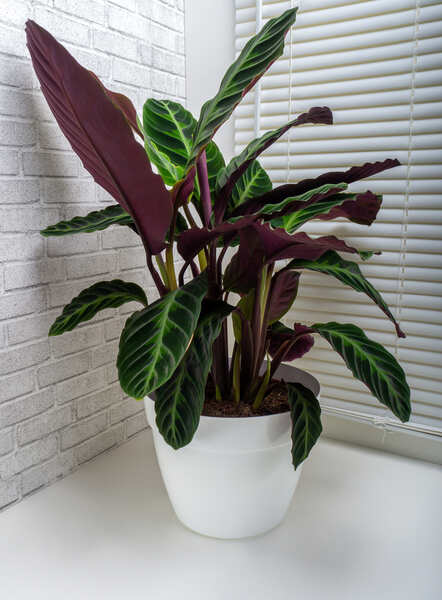

Calathea Warscewiczii, most commonly known as Wilderness Velvet Calathea is a sort of tropical plant known for its striking foliage.
They have been quite recently renamed, Goeppertia Warszewiczii due to biological advancements.
This plant belongs to the Marantaceae family. It is naturally found in South and Central America.
It is a blossom, vascular plant, with incline stems and wide leaves.
It is shaggy and grows in a rainforest under shade.
There are around 39 different variations within the Calathea species. They differ in their physical forms due to slight chromosomal modifications that give each plant its unique characteristics.
This particular species has been researched enough times to understand its physical appearance, its DNA, and even how certain viruses affect its growth and population.
Calathea Warscewiczii Quick Facts
| Plant Common Name | Calathea Jungle Velvet |
| Plant Botanical Name | Calathea warscewiczii , Goeppertia warszewiczii |
| Plant Family | Marantaceae |
| Annual or Perennial | Perennial |
| Plant Size at Maturity | 20 to 40 inches tall and wide |
| Sunlight | Partial sunlight |
| Soil Type | Well-drained soil but moist |
| pH of Soil | 6 to 7 |
| USDA Hardiness Zones | 10,11 |
| Native Area | South And Central America |
| Toxicity | Not Toxic to Humans or pets |
How Do You Care for Calathea Warscewiczii?
This plant is unique because of its variegation. The leaves are dual-toned with a marron-purple underside.
They need very specific environmental conditions to thrive and grow which is why they might be one of the most challenging species to grow indoors.
Let’s go in-depth on how you can take care of Warscewiczii in your home.
a) Light Requirements
Jungle Calathea requires indirect yet bright sunlight. Ideally, you can keep them near a window facing North. However, if there is no other choice you can also keep them near east or south-facing windows with a barrier like a window cover or curtain in between.
These plants can withstand low-condition lights such as in winter however it stunts the growth of the plant. On the contrary, exposing it to extremely bright and direct sunlight can cause the patterned leaves to change color and burn.
b) Soil Requirements
The potting soil for this plant needs to be moist yet allow for a good drainage system. Ideally, a mixture of major parts of Peat Moss, Coco Air, Perlite, Orchid Bark, Vermiculite, Charcoal, and Worm castings should work.
Similar to other jungle plants excess moisture in the soil for a long period can cause it to become waterlogged. Waterlogging affects root health and plant growth. Try to use soil that is lightweight.
c) Water Requirements
Warscewiczii is a high-maintenance plant to grow indoors and needs to be watered with filtered water or rainwater to make the soil moist but not soggy. They have very specific water needs. Unlike other plants, they may not give you physical signs of stress if there is any issue with their watering needs.
The perfect time to water them is when the strong is dry half an inch from the top. They are very sensitive to extreme conditions, either excess moisture or lack of one.
During winters these plants are dormant and do not need as much water. However, during summer months you need to make sure the soil is moist, not soggy at all times.
Ideally water early morning so that by nightfall it has dried out a bit.
Keeping the soil damp overnight can cause contagious issues.
It is really important to use water with less mineral and salt content as the plant is very sensitive to them.
You can utilize sifted water or rainwater
d) Temperature Requirements
Being tropical plants they enjoy a warmer climate and thrive between the temperatures of 65-85 degrees Fahrenheit (18 to 29 degrees Celsius) the maximum temperature it can tolerate is 90 degrees Fahrenheit or 32 degrees Celsius and that too only under high humidity.
Due to this very reason, it can become dormant under low temperatures. Anything less than 60 degrees Fahrenheit is a no-go.
Consequently, any sudden changes in temperature either high or low can damage the leaves of the plant.
e) Humidity Requirements
Calatheas are fussy plants when it comes to humidity. To make sure they grow beautifully maintain 50% or higher humidity levels in the air. It loves moisture and can get paper-like brown leaves if the air around it remains dry.
They need higher humidity than what is available inside a home. Due to this, it is important to provide artificial ways of increasing the surrounding humidity.
You can use a humidifier that is extremely effective or even mist the plants.
f) Fertilizer Requirements
These plants don’t need to be heavily fertilized. You can use an organic or nitro-based fertilizer once a month. You need to ensure that you are diluting the fertilizer to a quarter or half the dose to avoid any damage to the plant.
As this plant does not do well with a lot of nutrients it is ideal to clean the soil once every 2 months to avoid the minerals from the fertilizers accumulating in the soil. You can let the plant under running water for a few minutes to flush it.
Pruning Calathea Warscewiczii
Pruning is a way of maintaining the plant by removing any dead or infected parts. It helps refocus the nutrients to the healthy parts of the plant.
Moreover, it also enhances the overall beauty of the plant.
Just make sure you are using sterilized scissors or knives to cut the plant parts.
How to Propagate Calathea Warscewiczii
You want to have more of the Calatheas but not spend more money on buying them again. Essentially utilize your existing plant to develop unused ones.
This is called propagating the plant. There are 2 popular ways that you can propagate them. Here are these methods:
a) Stem Cuttings
To propagate these plants using their stems;
- Take a small cutting a few inches tall which has at least 2-3 leaves attached.
- Cut from the base of the stem that is attached to the mother plant.
- Use the stem cutting and plant it in a pot arranged with the suitable prepared soil.
- Cover the stem with a plastic wrap with holes in it to trap humidity and allow the plastic to breathe. Make sure it gets enough sunlight.
- You can remove the plastic cover once you see the stem and roots grow.
- Continue to give the required natural necessities for the plant to grow.
b) Rhizome Division
Another way to engender the plant is by division. Let’s see what that looks like;
- Ensure that you clean the roots of your plant and depot it.
- Find a baby plant with its roots and at least one leaf attached to the stem.
- You can separate it with your hands or use a clean scissor. Be careful when handling the plant.
- Place the baby plant into a smaller pot ideally about 4-5 inches. Make sure the soil is up to the ideal requirements.
- Expose the pot to a highly humid environment with indirect bright sunlight.
Potting and Repotting Calathea Warscewiczii
Calathea is sensitive to their surroundings. Frequently repotting them can affect their growth as it can take time for them to adjust to their new surroundings. You should ideally repot these plants every 2 years.
Check if the roots are growing out of the soil or when you take the plant out the roots are curled at the bottom. This indicates less growing space and you can repot it in a 2-4 inch larger container.
Calathea Warscewiczii Common Pests & Plant Diseases
Because the plant requires moist soil, it makes it an easy target for bugs and fungi like spider mites, mealybugs, mites, and scales.
They can result in discoloration of the leaves, the presence of a sticky substance, white nests and webs, molding, and holes/spotting on the plant.
Ideally, if certain parts of the plant are affected you can trim them off and revive them. However, if the whole stem and root system are infected then it might be impossible to save the plant itself.
Use of insecticides and agricultural oils like neem can be used for cure. Once you have determined the plant is infected and have removed all the infected parts flush the soil with water to get rid of any residues within the soil itself.
Common Problems With Calathea Warscewiczii
Calathea being a high-maintenance plant is susceptible to running into different issues due to inadequate environmental conditions.
It is important to ensure optimal surroundings are being provided so that the plant avoids running into the following issues.
a) Curling Leaves
If you notice the leaves of your Calathea shrinking or frizzling it could be either of these two issues.
Your plant is drying out in which case check by touching the soil, if the top half inch is dry water the plant.
Or the temperature is low for the plant’s liking. Check the surrounding temperature and bring it back up. You can also change the location of the plant to provide it with a warmer atmosphere.
b)Yellowing Leaves
Yellow leaves are usually a cause of incorrect water exposure. Either the plant is too dry or too wet. In both cases, you can check the soil to keep track.
On the other hand, yellow leaves are also caused by an attack from red spider mites. It starts with yellow spotting and turns yellow completely if left unchecked.
c) Dry Brown Spots or Edges
Browning of leaves is one of the most common problems and something irreversible.
First of all, humidity levels are extremely important for the plant. Dry weather can cause the plant to dehydrate.
So it is important to ensure that you are watering the plant sufficiently and making sure the air around it is not dry.
You can use a humidifier or try misting the plant if you live in an area with very low moisture levels.
Another reason can be excessive minerals in the soil. Over-fertilization can cause the plant to retain extra nutrients which in turn is toxic to it.
You can use the method of flushing the soil in filtered, distilled, or rainwater in order to remove these potentially harmful toxins.
d) Crispy Leaves
Similar to the Browning of leaves crispy leaves indicate a lack of water and moisture and high mineral content.
Ensure that the moisture levels are up to the optimal condition that the plant requires. Furthermore, make sure that you are using the proper soil and fertilizer amount.
Toxicity of Calathea Warscewiczii:
Would still not recommend ingesting it though!
Frequently Asked Questions
Why is My Calathea Warscewiczii Drooping?
The Calathea Warscewiczii prefers moist soil. Its leaves start to droop if its soil dries too much.
You can check the soil but make sure to only water if the first few inches of the soil are dry. Also, keep in mind that Calathea’s leaves move with the light.
This means that the leaves may appear to be droopy during the day and will move upwards in the evening.
When Should I Repot My New Calathea Warscewiczii?
It’s important to repot your Calathea when it’s rootbound. How do you know if it’s rootbound? Well, simply observe whether roots are coming out of the drainage hole.
If they are then that’s your sign to repot your plant. Other than that, there’s no need to repot it unnecessarily since it’s a sensitive plant.
Where Should I Place My Calathea in My Room?
Place your Calathea away from any open windows with sunlight. Make sure to keep it away from hot air as well.
These plants thrive in humidity and grow best in shady rooms. You can simply provide your plant with humidity by placing a humidifier in the room.
Can I Give Calathea Tap Water?
No! Do not give tap water to your Calatheas! Tap water contains mineral chemicals and these plants are sensitive to fluoride, salts, and many other chemicals present.
Distilled water is the best water to use but distilled water and rainwater work as well.
Trusted Citations & Sources Used
Articles on Itishomegarden are thoroughly researched and fact-checked using trusted resources to ensure that they are relevant and accurate Here is a list of references for this article
- https://mrec.ifas.ufl.edu/foliage/folnotes/calathea.htm
- https://www.researchgate.net/publication/272015050_Genome_analysis_of_species_of_Calathea_utilizing_chromosomal_and_nuclear_DNA_parameters
- https://www.biorxiv.org/content/10.1101/2020.11.13.382317v1.full.pdf
- https://ijisrt.com/assets/upload/files/IJISRT21FEB016.pdf
- https://www.thieme-connect.com/products/ejournals/pdf/10.1055/s-0030-1271187.pdf
Also Read
Alocasia Regal Shield Care Guide
Neon Pothos Growth & Care guide
Ficus Elastica Tineke Care & Growth Guide