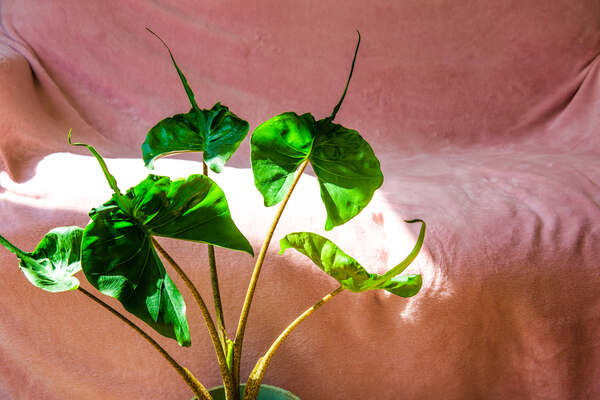

Alocasia Stingray (Scientific name Alocasia macrorrhizos ‘Stingray’, is a popular houseplant usually found in the tropical rainforests of Southeast Asia. It gets its name due to its unique foliage. The distal part of the leaf is reduced to a thin pointed midrib, which resembles the shape of a marine animal known as a stingray.
It has flat, leathery leaves that curve inwards while pointing upwards. The plant also produces white flowers which later turn into a red fruit when it’s ripe. They grow 4 feet tall indoors, reaching a height of 15 feet if growing outdoors in their ideal environment. Being a beautiful and aesthetic addition to our home, be aware that it is actually toxic to our furry friends.
Dive deeper into this article as we walk you through everything involved in growing and taking care of your very own Alocasia Stingray.
So, let’s get straight into it!
Alocasia Stingray Quick Facts
| Plant Common Name | Alocasia stingray |
| Plant Botanical Name | Alocasia macrorrhiza ‘Stingray’ |
| Plant Family | Araceae |
| Annual or Perennial | Perennial, corm |
| Plant Size at Maturity | Outdoors 15 feet , Indoors 3–4 feet tall |
| Sunlight | Partial sunlight |
| Soil Type | Well-drained soil but moist |
| pH of Soil | Acidic |
| USDA Hardiness Zones | 9-11 |
| Native Area | Asia |
| Toxicity | Toxic to pets |
How Do You Care for an Alocasia Stingray?
If you have a plant from the Alocasia family in your home, you already have an idea of how to care for the Alocasia Stingray. Although it is pretty similar, there are certain things to be mindful of.
Due to its specific requirements, it might seem a tad bit complicated however once you hit the target it thrives beautifully. Not recommended for newbie gardeners, Alocasia stingray thrives in the proper light, moisture, humidity, and temperature.
a) Light Requirements
Like many plants that grow under a canopy in a rainforest, Alocasia Stingray grows well under bright, indirect sunlight.
Although direct sunlight for some time during the day is okay, ideally it should be placed with a thin veil of curtain or window film acting as a filter or placed on an East or South facing windowsill.
Direct sunlight can burn the leaves of the plant, and if there isn’t enough sunlight, the stems become lanky and the leaves may lose their unique design. Therefore, maintaining balance is crucial.
b) Soil Requirements
The plant requires a slightly acidic, airy, and well-draining medium to grow. The soil should have an adequate amount of water, but it shouldn’t overflow so use a soil mixture that takes away excess moisture. You can create your own mixture at home by combining equal parts potting soil, perlite, and peat moss.
You can alternatively also plot the plant in LECA ( Lightweight expanded clay aggregate). This gives the plant ultimate breathability and reduces the risk of overwatering.
c) Water Requirements
Growing naturally in a rainforest, Alocasia Stingray has high watering needs so water it consistently and don’t let it dry out. However, saying that, they need moist soil but not soil that is overly wet so choose a soil mixture that is well draining so that the plant doesn’t become waterlogged.
Water the alocasia stingray plant only when the top inch surface of the soil is dry and ensure that it is planted in a pot with holes for drainage so that the pot does not get completely filled with water.
Avoid over-watering the plant during fall through early spring as it doesn’t have that much growth spurt and should remain drier to avoid waterlogging.
d) Temperature Requirements
The most suitable Alocasia Stingray temperature range is between 65°F (18°C) to 85°F (29°C) but as long as temperature is above 59°F (15°C) it works for this houseplant
These plants thrive in warm, humid conditions like the ones in a rainforest. Mostly the household temperature is fine (in the warmer climate near the equator).
It’s not that hard to achieve the correct temperature for the Stingray plant if you live in areas under USDA hardiness zones 10 to 11. Other zones might have to mimic normal temperature, usually found near the equator using heaters, etc.
Avoid placing your plant near cold drafts, windows, or air-conditioners.
e) Humidity Requirements
Alocasia Stingray thrives in humidity levels between 40 to 70%
It is important to be mindful of the humidity levels to grow a lush and healthy plant.
Typically household humidity levels are fine, although if your home is on the drier side, you might want to have a humidifier to prevent the leaves from developing dry spots.
Mist the plants in the morning in order to increase humidity. However, ensure that you don’t over mist as wet leaves are a breeding ground for bacteria and fungus.
f) Fertilizer Requirements
Alocasia stingray requires fertilization 2 times in a month during the growing season in summer and spring. Alocasias in general are plants requiring higher fertilization. Stingray is in no way an exception.
Giving fertilizer is recommended during spring and summer as they grow quickly around that time. You can stop during fall and winter as the plant isn’t actively growing during that time.
Make sure the fertilizer is diluted, and the soil is damp before avoiding any fertilizer burns.
How to Propagate Alocasia Stingray by Division
Alocasia Stingray can easily be propagated using the Rhizome Divison, which is extremely simple and successful.
- First de-pot the plant and wash its roots of excess soil.
- There will be several offsets and clusters take care to remove all the corms and offshoots from the roots of the main plant.
- Divide the rhizomes using a germ-free blade allowing its seeds to dry for a few minutes.
- Ensure you wear protective gloves when handling the plant to avoid irritation. Place the offsets in healthy soil and plenty of water.
- You can re-pot the original plant and continue caring for it.
How to Propagate Alocasia Stingray by Growing its Corms
Healthy and mature Alocasia plants easily grow corms in and around their roots. If left untouched, these corms, most of the time, develop into new Alocasia plants within the existing plant’s pot.
To propagate the plant by growing its corms simply:
- Take out the plant and place it on its side.
- Dig around the soil and feel for the corms growing near the roots. You will see small and round corms which are either brown or light green. They can be separate or attached to the roots themselves. To separate it from the roots, you can break it off at the base.
- Peel off the outer brown husk to get the inner green corm. In a small container of fresh water, add these corms. They shouldn’t be immersed in water but only covered about ⅔ . Wrap the container with plastic wrap to create a greenhouse-like atmosphere and ensure it is placed under direct sunlight.
- Refresh the water every couple of days so that the corms don’t dry. Once you see them growing, reposition the corm standing up with the roots immersed in water and the leaves above water.
- Once the roots are at least 2 to 3 inches long, prepare a small pot with a well-draining potting mix and plant the rooted corms in the soil. Put it under indirect sunlight and water regularly.
Potting and Repotting Alocasia Stingray
As these plants are slightly root bound, you can easily re-pot them every 1 to 2 years. However, there are a couple of things to keep in mind when repotting them.
Re-pot them during springs or summers as that is their high growth period which means more chances of recovering well.
Choose a pot that’s around 2-4 inches bigger than the previous one to avoid over-watering the plant as the bigger pot will require more soil than needed.
Be careful with the roots, so they don’t get damaged when you are potting these plants.
Alocasia Stingray Common Pests & Plant Diseases
Just like other house plants, things like pests, spider mites, bugs, and fungus can affect your Alocasia Stingray.
Due to the smaller size of the plant, these pests are hard to spot until they have spread. So as a precaution always check your plant thoroughly, especially in those hidden curves and spots.
Similarly, many diseases can affect the plant. Overwatering or having incorrect soil type can lead to root rot, leaf spot disease, or botrytis which is a gray fungal disease.
As a precaution, ensure the plant does not have excess moisture, as it provides a thriving ground for bacteria and fungus.
Common Problems with Alocasia Stingray
There are many ways to recognize that something is wrong with your stingray. The easiest way is to look for physical discrepancies, such as discoloration or deformities on the leaves. Most of these issues are a result of pests or bacteria.
Yellow Leaves
Yellow leaves indicate that your plant is in distress due to either excess or lack of water in the soil. It can also be because your potting mix isn’t breathable and not draining the water properly.
This is a very common indicator of diseases like root rot. Just thoroughly check your pot conditions if the leaves of your stingray start turning yellow.
Dropping Leaves
The dropping of leaves usually indicates that the surrounding climate is not suitable for the growth of the plant. There can be several factors, from not receiving the accurate amount of sunlight to the lack of humidity surrounding the plant.
Make sure that the plant receives an adequate amount of indirect sunlight and that the plant is not exposed to direct winds, air vents, or air conditioners that might be sucking the moisture out of its surroundings.
Brown Leaves
Brown leaves are a direct result of a lack of humidity or moisture. If the leaves of your stingray are turning brown just ensure that there is enough humidity in the environment. Use a humidifier if needed.
Moreover, ensure that the soil is moist enough and not dry.
Toxicity of Alocasia Stingray
Alocasia species is generally toxic in nature, and the Alocasia Stingray is no different. It contains high amount of calcium oxalate crystals which are toxic to humans and animals alike.
As a plant owner, the duty falls on you to ensure you are keeping it in a manner that is safe for others.
For Humans
Oxalate crystals can pierce tissues, causing skin irritation, nausea, and, gastrointestinal pains. Adults are not likely to ingest it, but coming in contact with the sap of the plant can cause skin irritation. It’s ideal if there is a warning label nearby for when you have guests over.
For children, being as they are more likely to ingest it, just keep it out of reach and it should be all good.
For Pets
It is a challenge to grow this plant in a household where you have pets. They are more susceptible to its toxicity, and it has a more severe effect on them.
Oxalate crystals will penetrate the tissues irritating the mouth and GI tract. Symptoms will include swelling of the mouth, salivation, and gastronomical issues.
Consult a doctor immediately if your furry friend shows signs of toxicity.
Alocasia Stingray Varieties
Alocasia comes in over 70 different types. They share similar properties yet are unique. Let’s take a look at some of them.
- Alocasia Zebrina: This has a unique stem that is black and yellow stripes like a zebra or a tiger. The leaves have a lush green color with an arrow-shaped structure.
- Alocasia Cucullata Hooder Dwarf: Having a unique stem with heartleaf foliage and rare flowers, this plant is considered to be a good luck charm and used for medicinal purposes.
- Alocasia Scalprum: It has embossed, elongated leaves like a blade with a dark green tint with a blue tinge to them. They have thick and sticky leaves as they mature.
Growing and taking care of an Alocasia Stingray is not as difficult as it appears from the outlook. You saw how simple it is if you follow the basic guidelines.
So, give it a shot and let us know how it turns out for you in the comments section below!
Frequently Asked Questions
How Big do Alocacia Stingrays Get?
Indoors the plant can grow up to 5 feet tall. Outdoors, in their natural environment, they can grow up to 15 feet tall. It depends on the quality of the plant you get as well as the environment and soil properties.
Can Alocasia Stingray Grow in Water?
Some people have documented growing Alocasia Stingray in water as a growing medium.
It is suitable for a short period of time, but we recommend moving the plant back to the soil as it doesn’t have long-term benefits and lacks the nutrients needed for growth.
Should I Mist my Alocasia Stingray?
Sometimes it’s recommended to mist the plants to increase humidity however it’s not the most effective way.
Moreover, it’s not ideal for the leaves to be moist all the time, as that is a breeding ground for bacteria and fungi.
Is Alocasia stingray Rare?
It is a unique and beautiful plant. In terms of house plants, it’s called rare for how expensive it is and because of their large size.
How Do You Take Care of a Stingray Alocasia?
Ensure that the soil and environment conditions are optimal as described above for the plant to thrive.
It is very important not to overwater or underwater the plant and for the solid to be easily drained to avoid the plant getting waterlogged.
How Much Light Does Alocasia Stingray Need?
For best results, the plant needs indirect sunlight for at least 6 hours a day. It should be bright but not direct to avoid light burns.
Trusted Citations & Sources Used
Articles on Itishomegarden are thoroughly researched and fact checked using trusted resources to ensure that they are relevant and accurate
Also Read
How to grow Calathea Warscewiczii
Alocasia Regal Shield Care Guide
Neon Pothos Growth & Care guide